Contact Centre Transformation – Amazon Case Migration
So Energy's contact centre had grown around tools that were beginning to show their limits, including Nova, our custom-built internal CRM. With the Freshdesk contract due for renewal and the business growing rapidly, the question was whether to use the moment to build something more integrated and future-proof.
The context
So Energy's contact centre had grown around a combination of tools that had served the business well in its earlier stages but were beginning to show their limits. Amazon Connect handled telephony, Freshdesk covered web chat, ticketing, and the agent knowledge base, and Nova – our custom-built internal CRM – held customer account data, including energy usage and billing. With the Freshdesk contract due for renewal in mid-2025 and the business growing rapidly, the question wasn't just whether to renew – it was whether to use this moment to build something more integrated and future-proof.
The migration project was led by the Transformation Lead and Engineering Director, with a cross-functional team spanning engineering, operations, QA, and an external AWS specialist partner. The objectives were clear: build an integrated, omnichannel contact centre platform, improve the agent experience, enable more automated customer journeys, and reduce cost to serve.
Choosing a direction
Before I was brought in, the team had already assessed several potential platforms – including Google Contact Centre Cloud – as part of an initial market review. The options broadly fell into three categories: buying an off-the-shelf solution, building something bespoke, or a hybrid of the two.
I was asked to facilitate a workshop to help the team work through the options and land on a direction. We ran a structured buy/build/hybrid exercise – mapping the pros, cons, risks, and open questions for each approach across a series of sessions. Buy offered the fastest path to market and lowest risk, but meant operating across two separate interfaces. Build gave full control and integration but carried significant upfront cost and time. Hybrid offered the benefits of buy with a more seamless agent experience – and given we were already using Amazon Connect for telephony, extending into AWS Case Management was both the lowest-risk and most cost-effective path. The pay-as-you-go model also avoided the contractual commitment that other providers required.
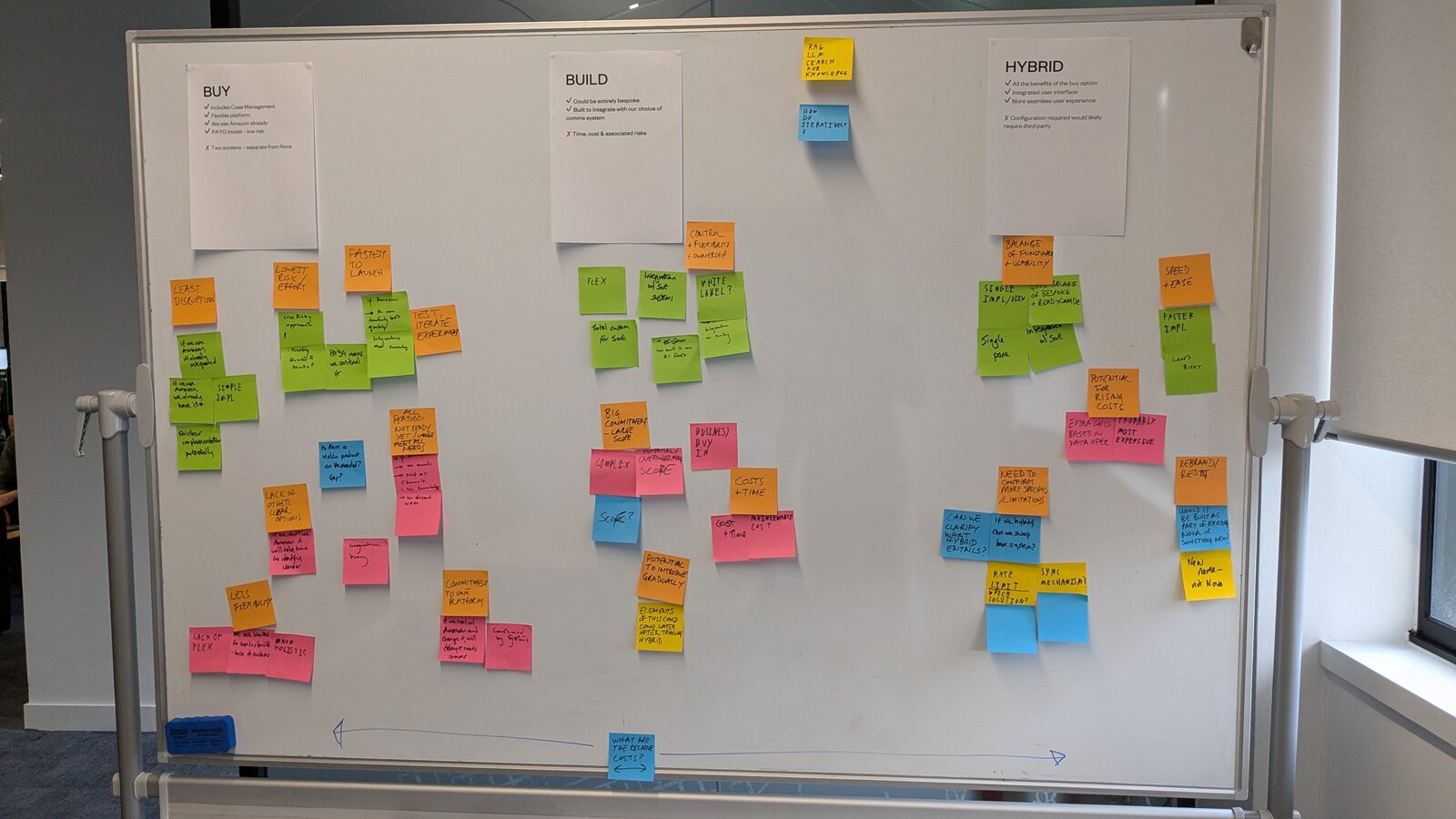
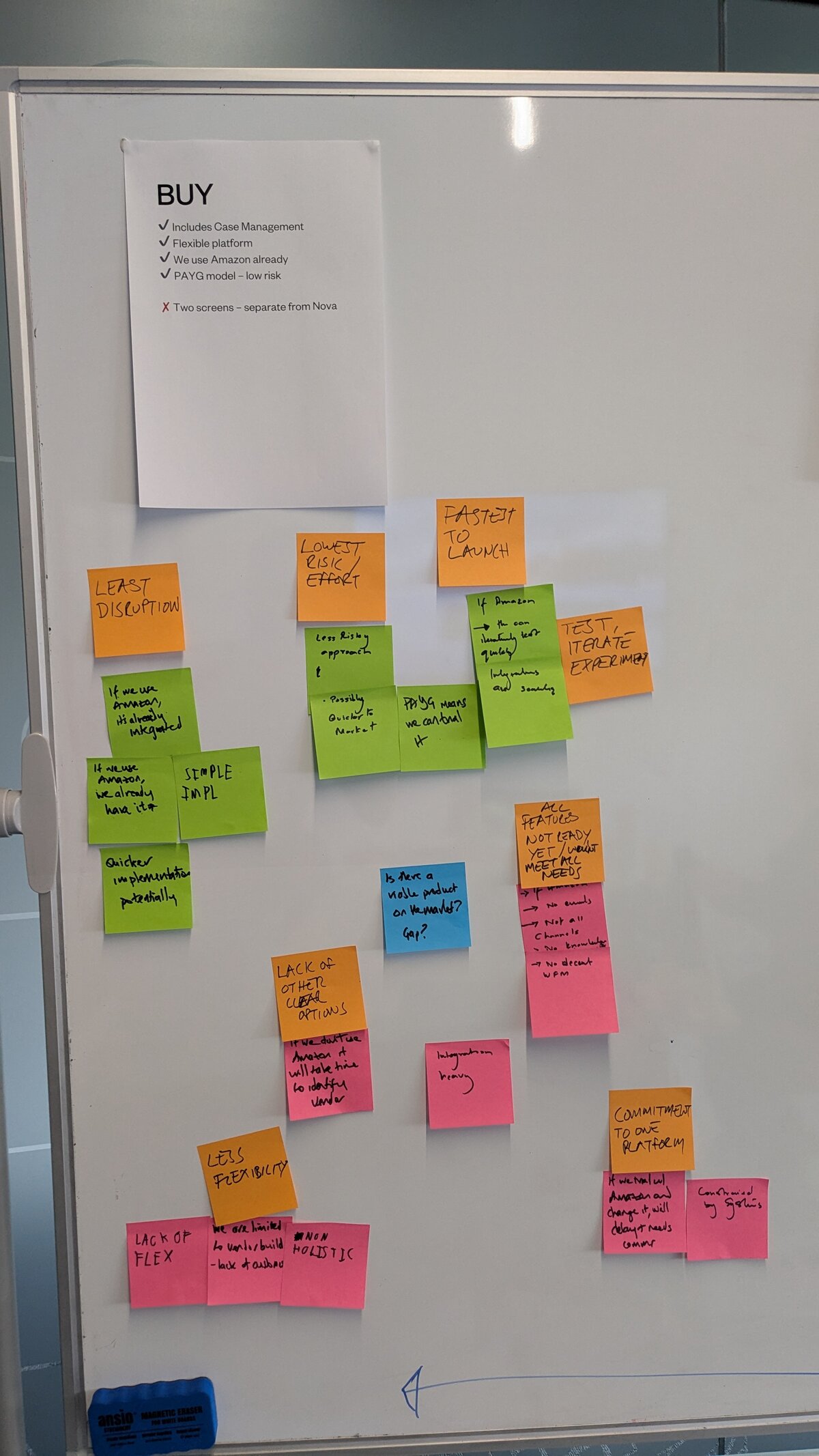
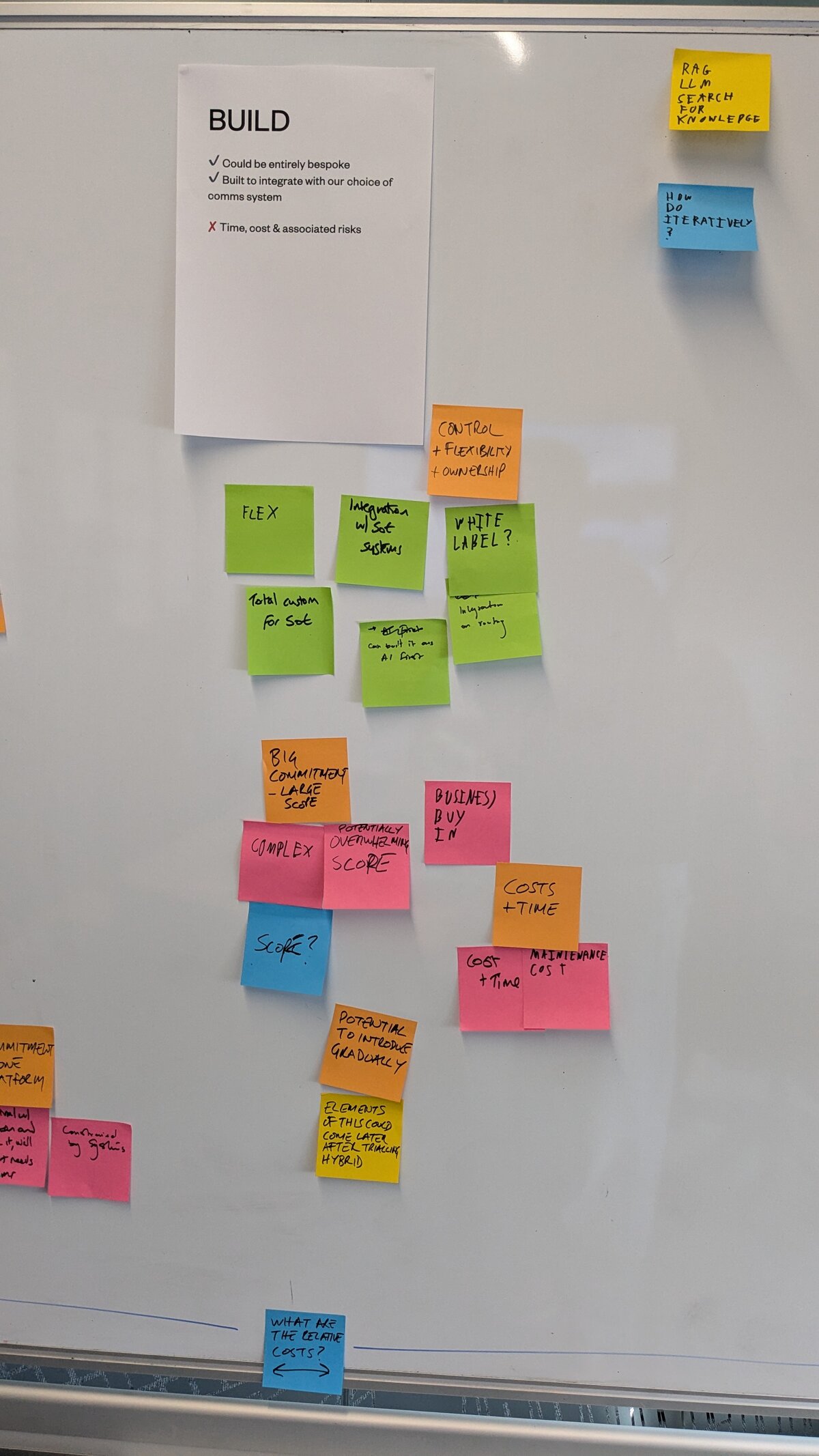
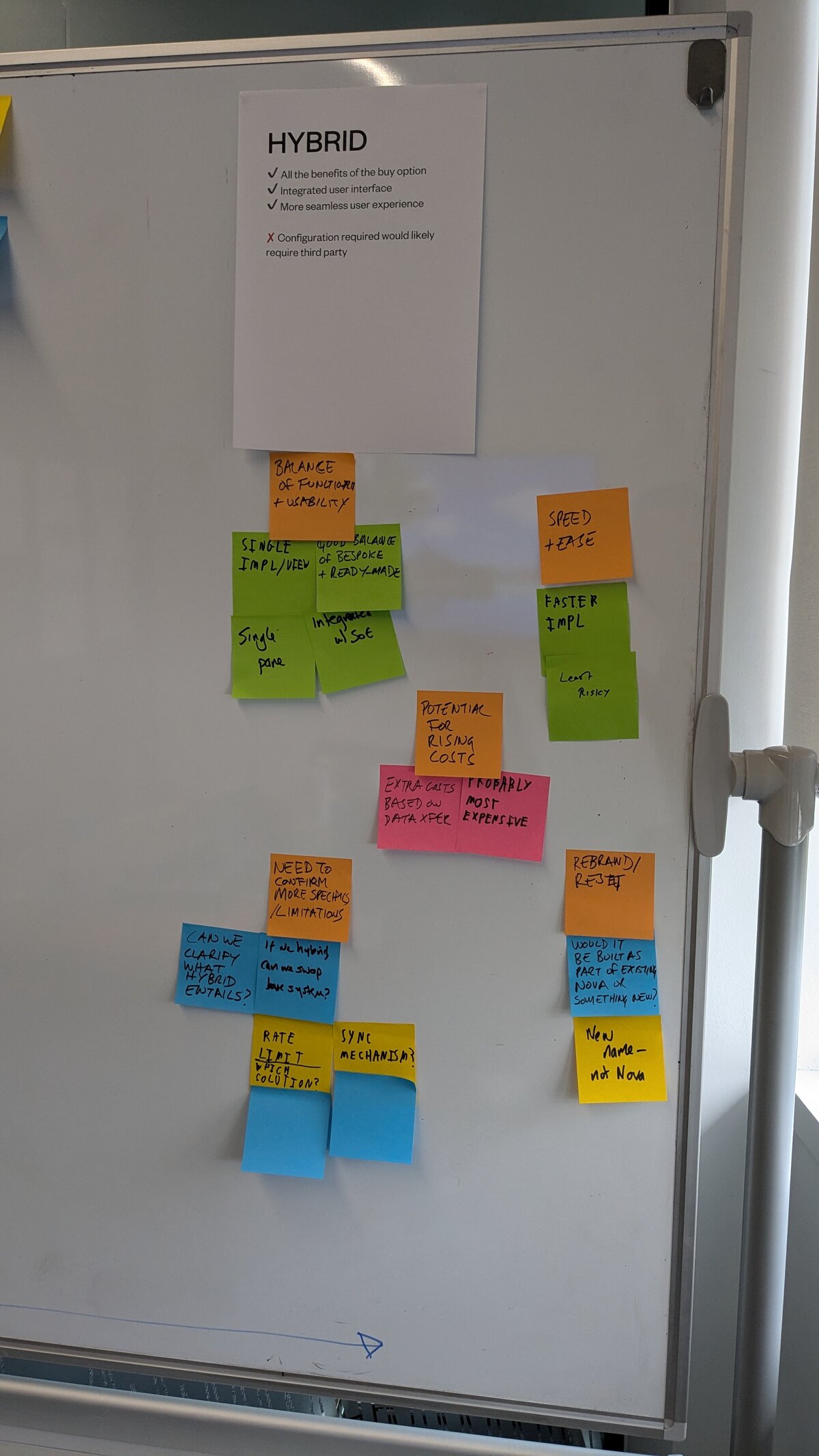
The decision: Amazon Connect Cases as the case management layer, with Nova surfaced inside the Amazon Connect interface as an embedded app. This kept engineering effort manageable within the timeline and gave agents a single working environment.
Discovery – understanding how agents actually work
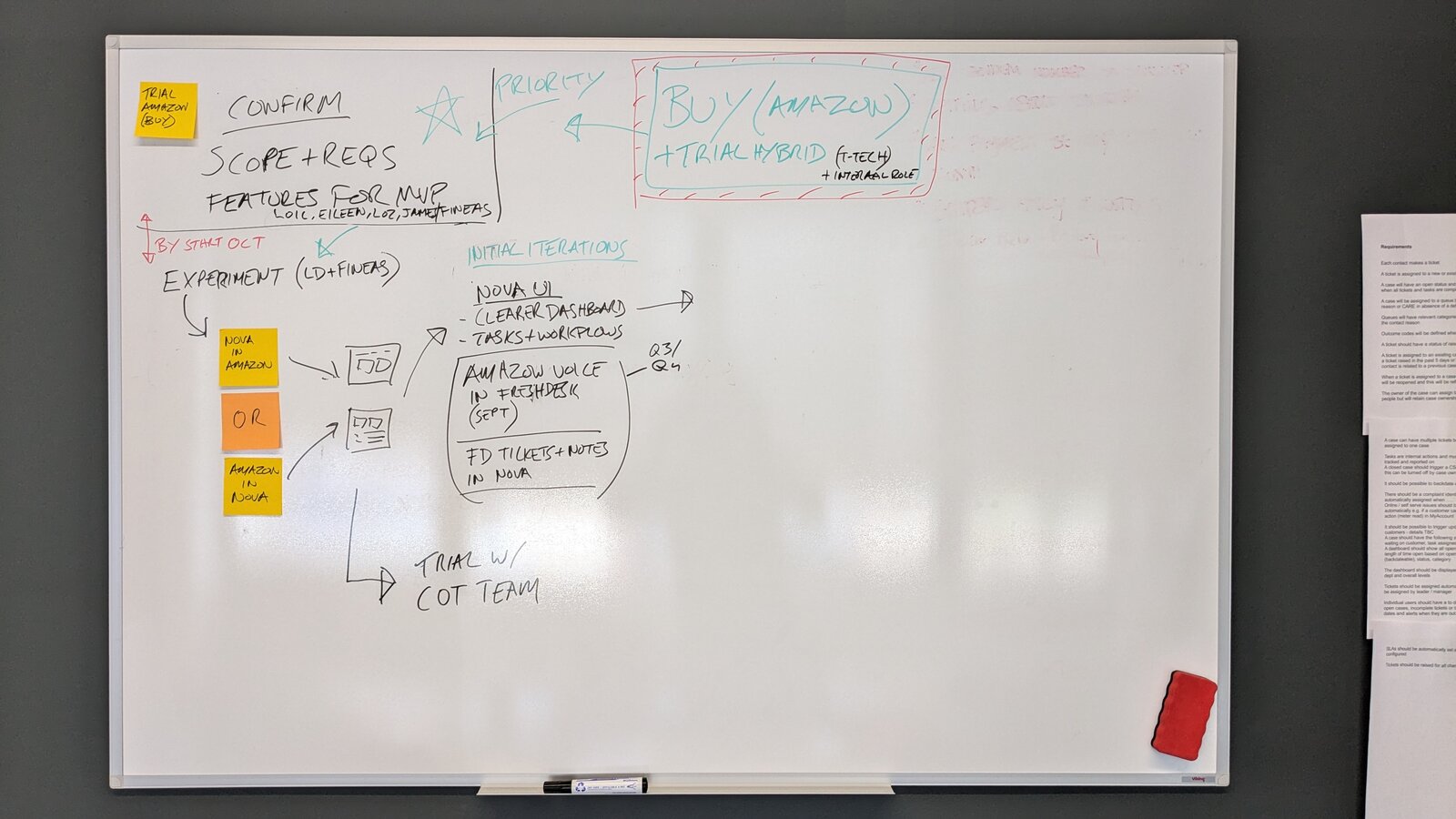
Once the direction was confirmed, I was tasked with building a proof of concept with the engineering team – captured in the whiteboard session that mapped the initial scope, requirements, and approach. From there, we moved into a more structured event-storming and domain-mapping exercise across several sessions in Miro, working through all the moving parts of the case management domain: contact ingestion, case creation, routing, resolution, task management, and reporting. Defining the actors, events, and relationships clearly was essential before any build could begin.
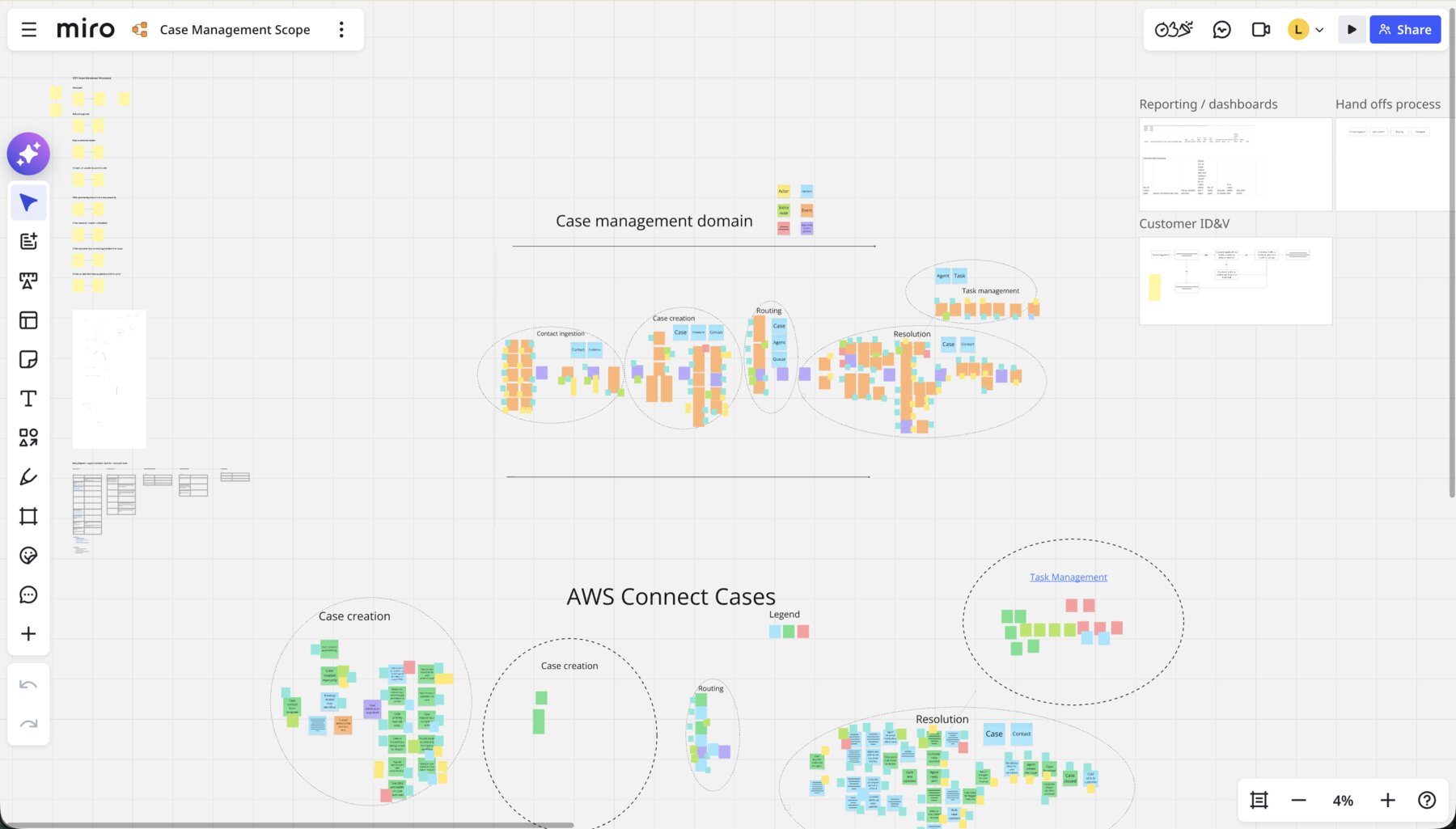
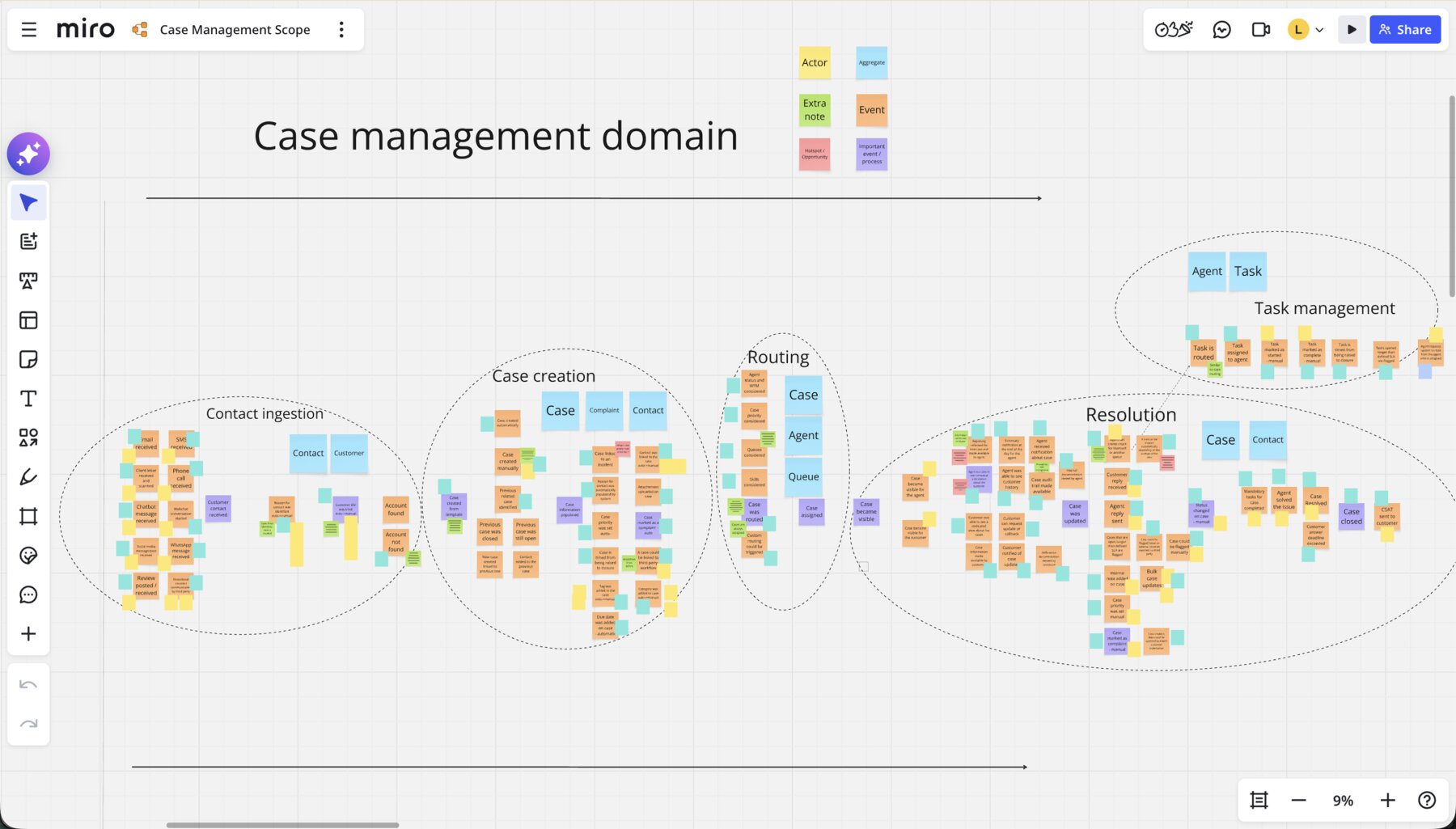
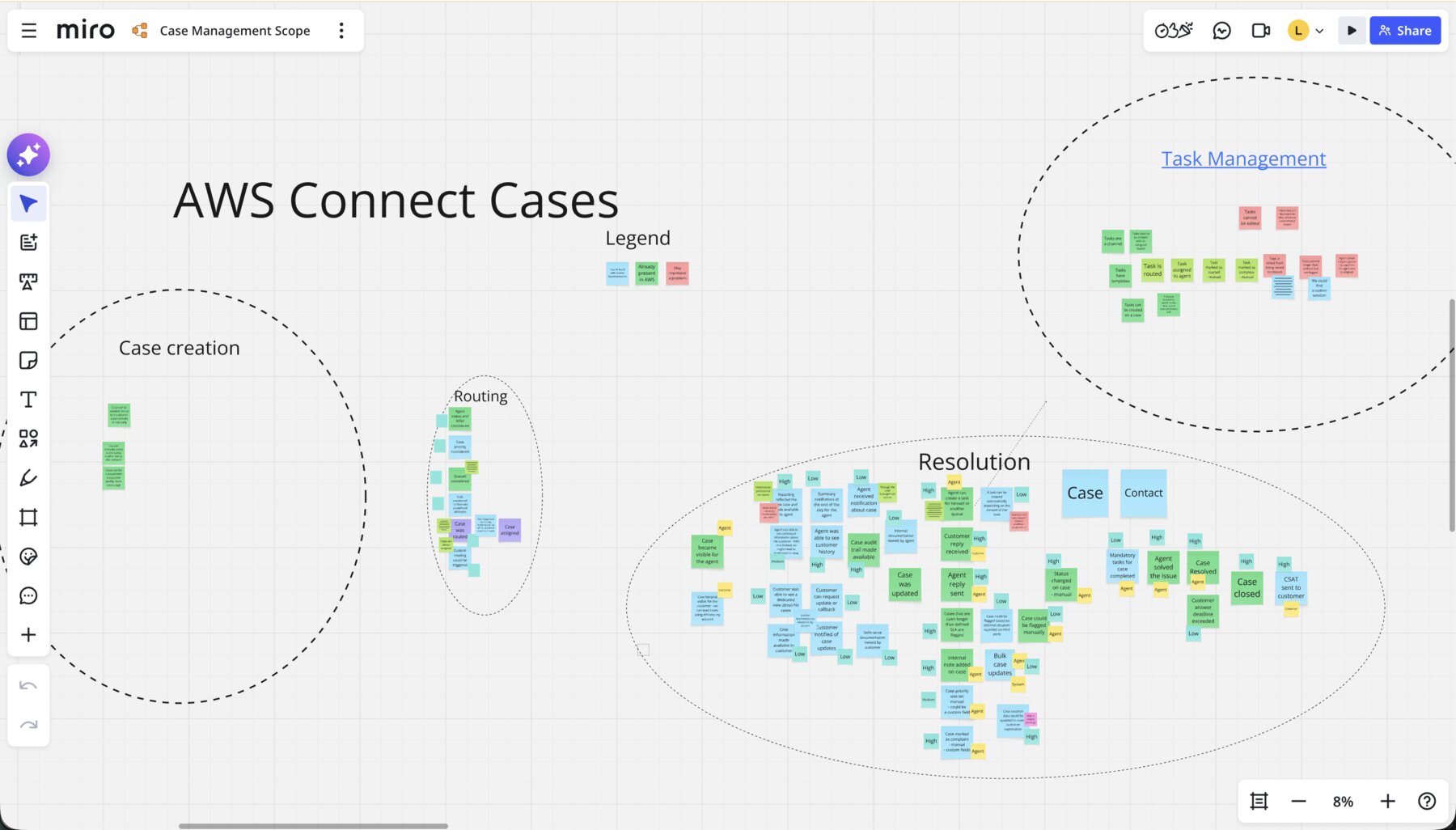
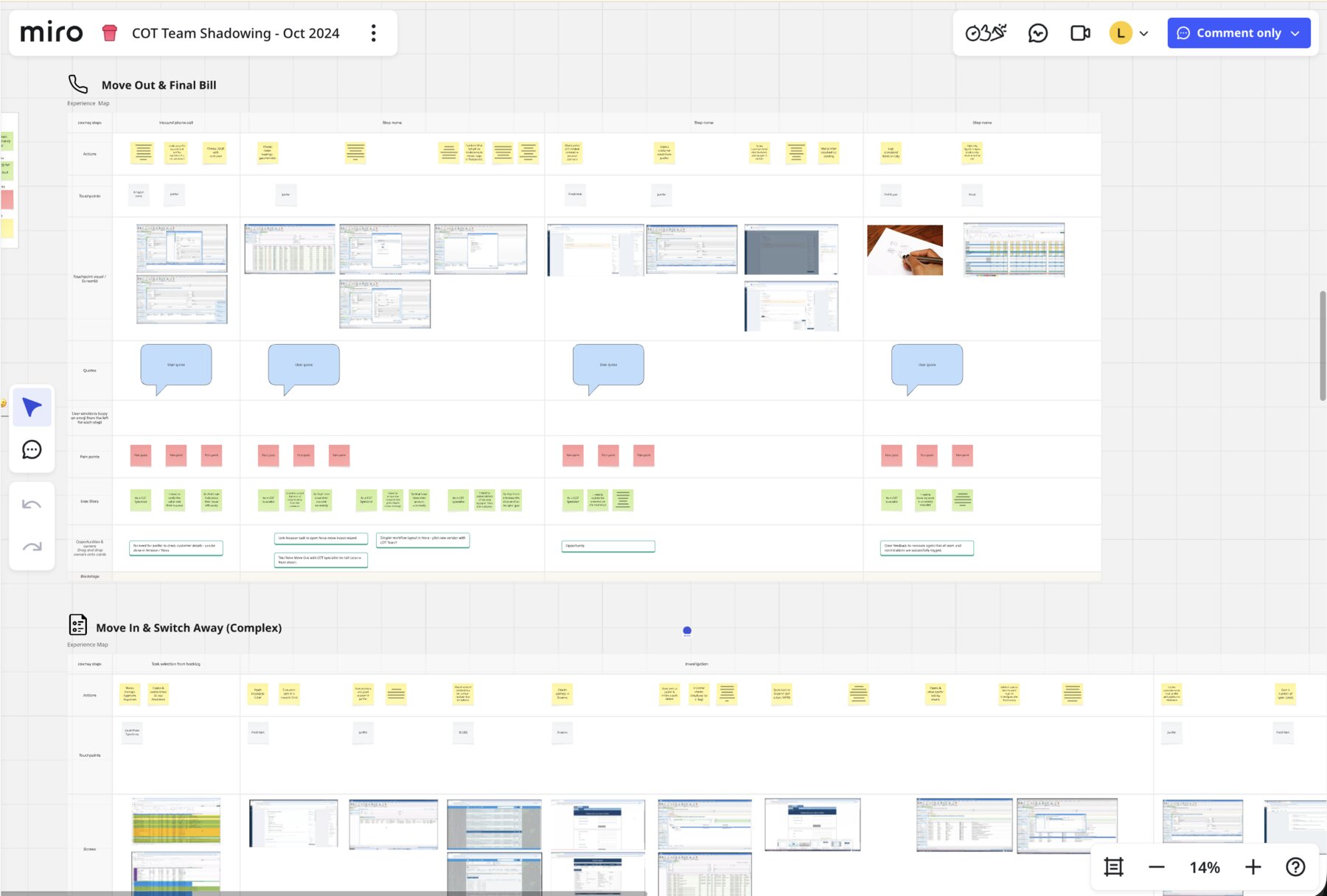
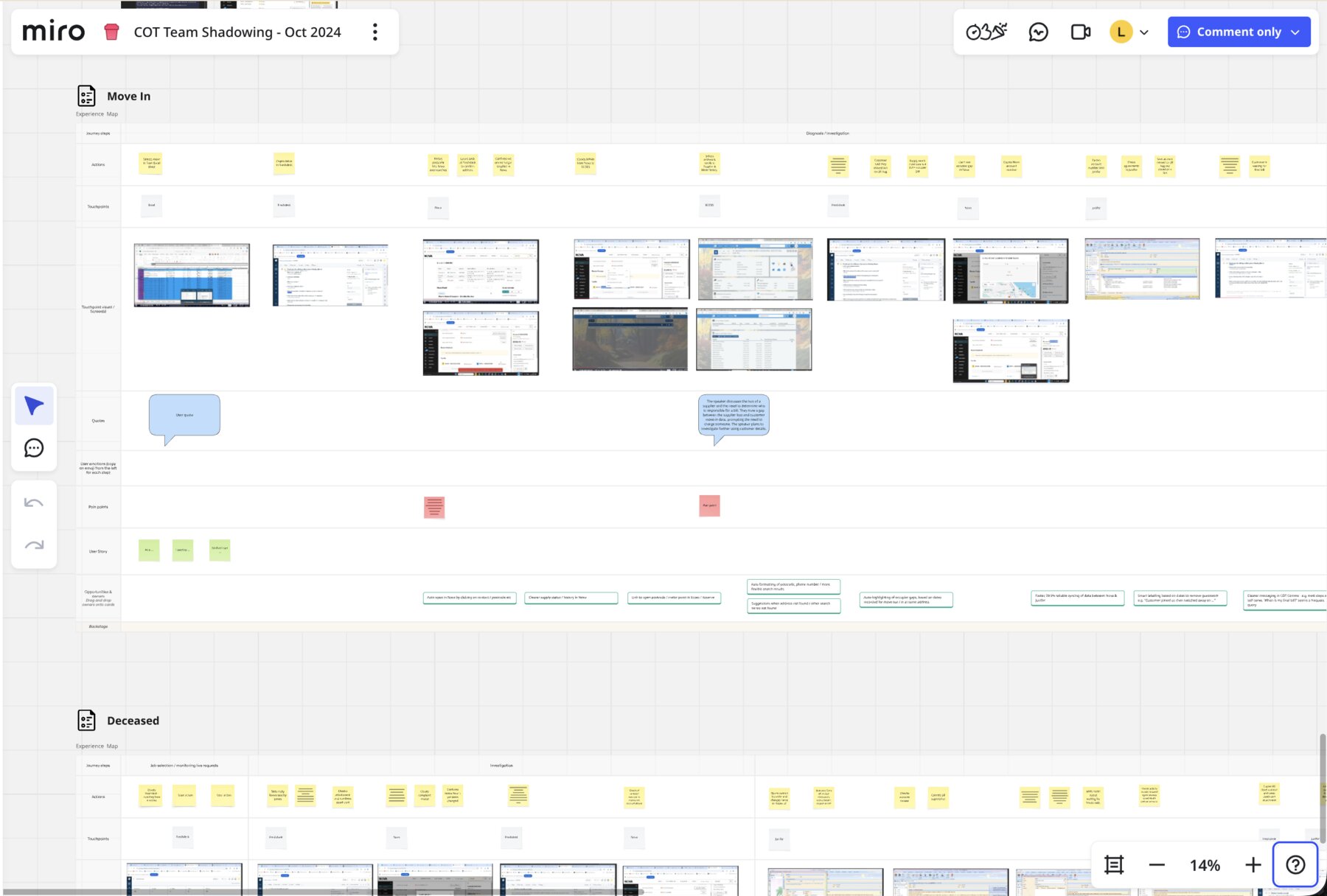
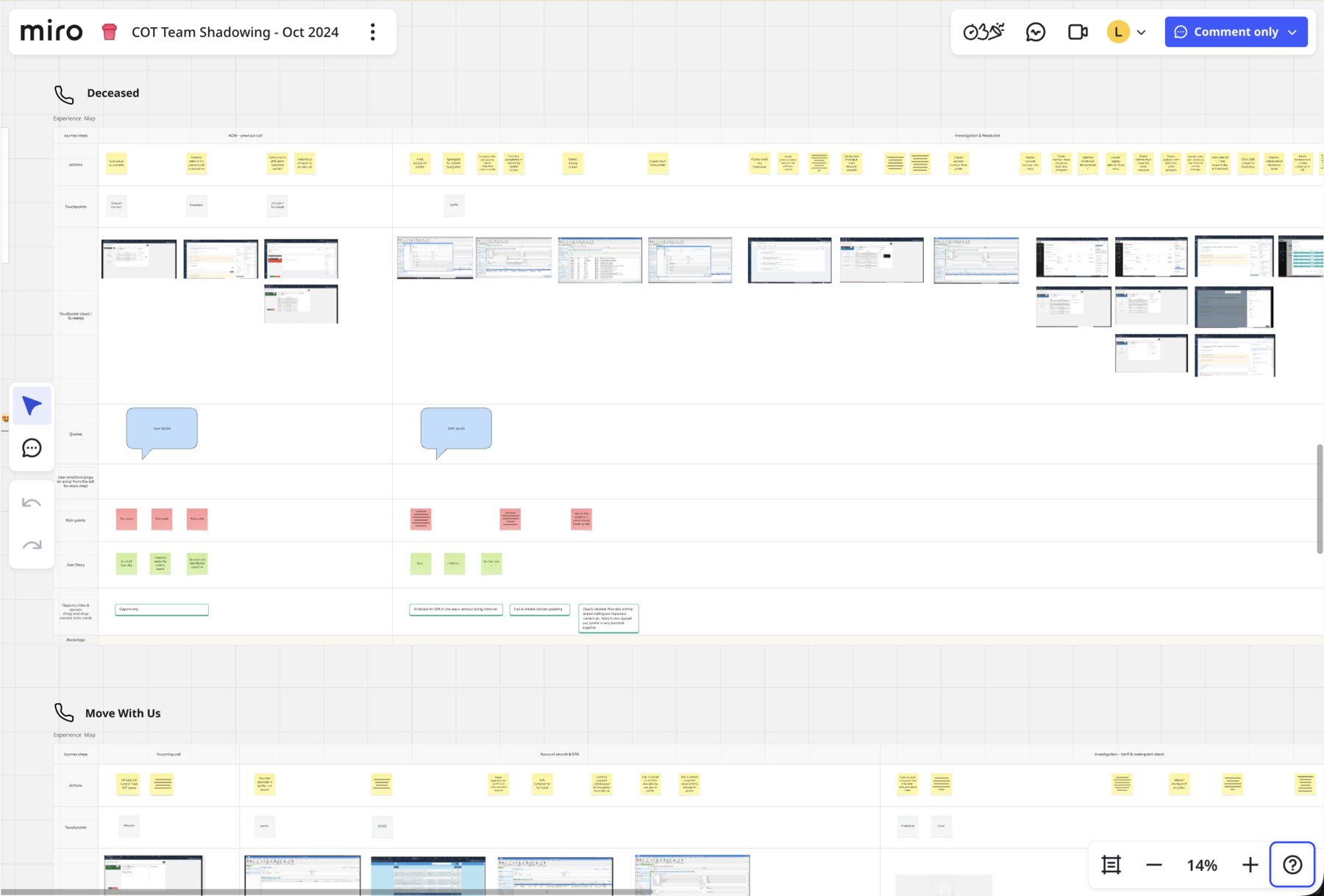
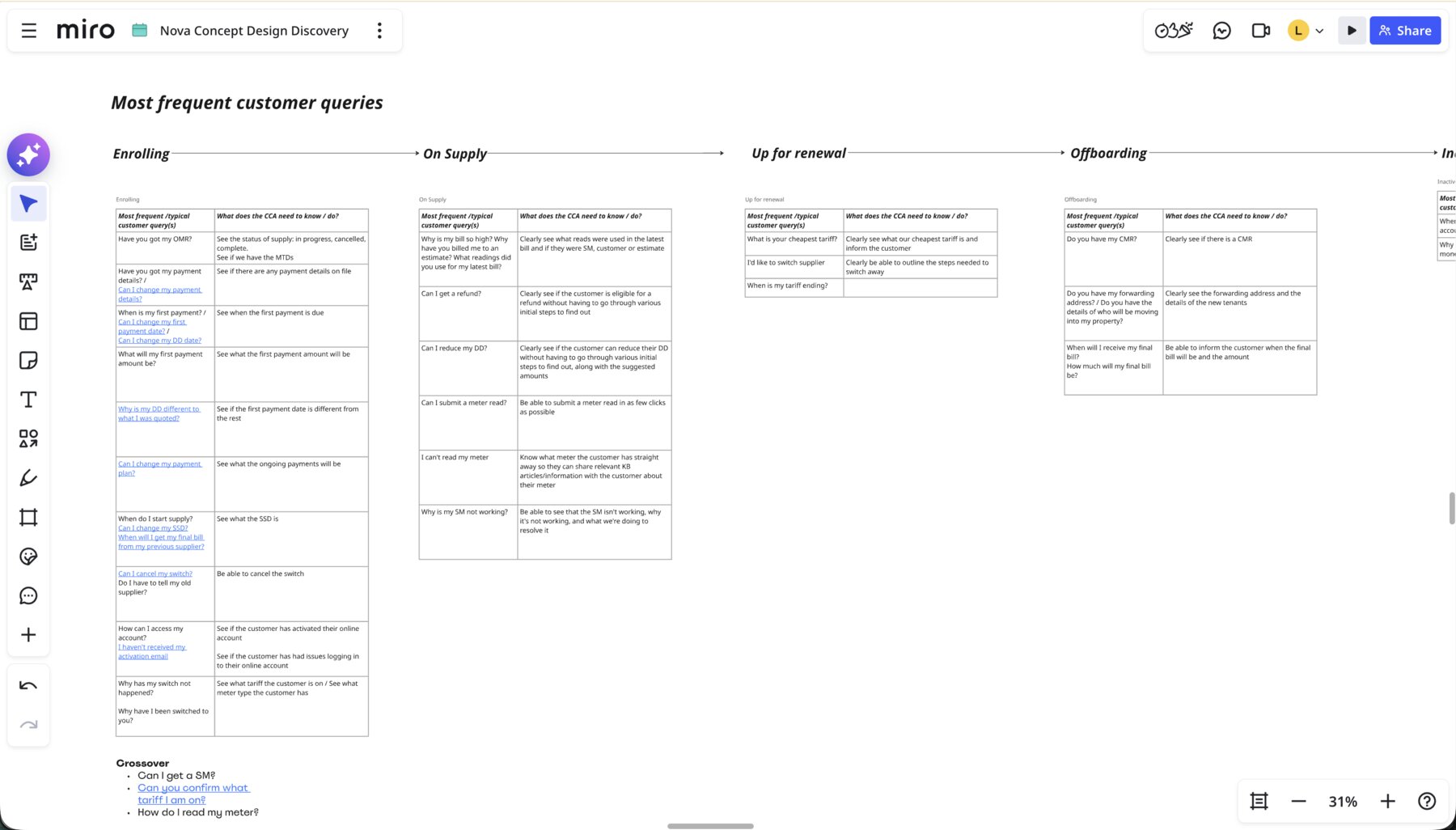
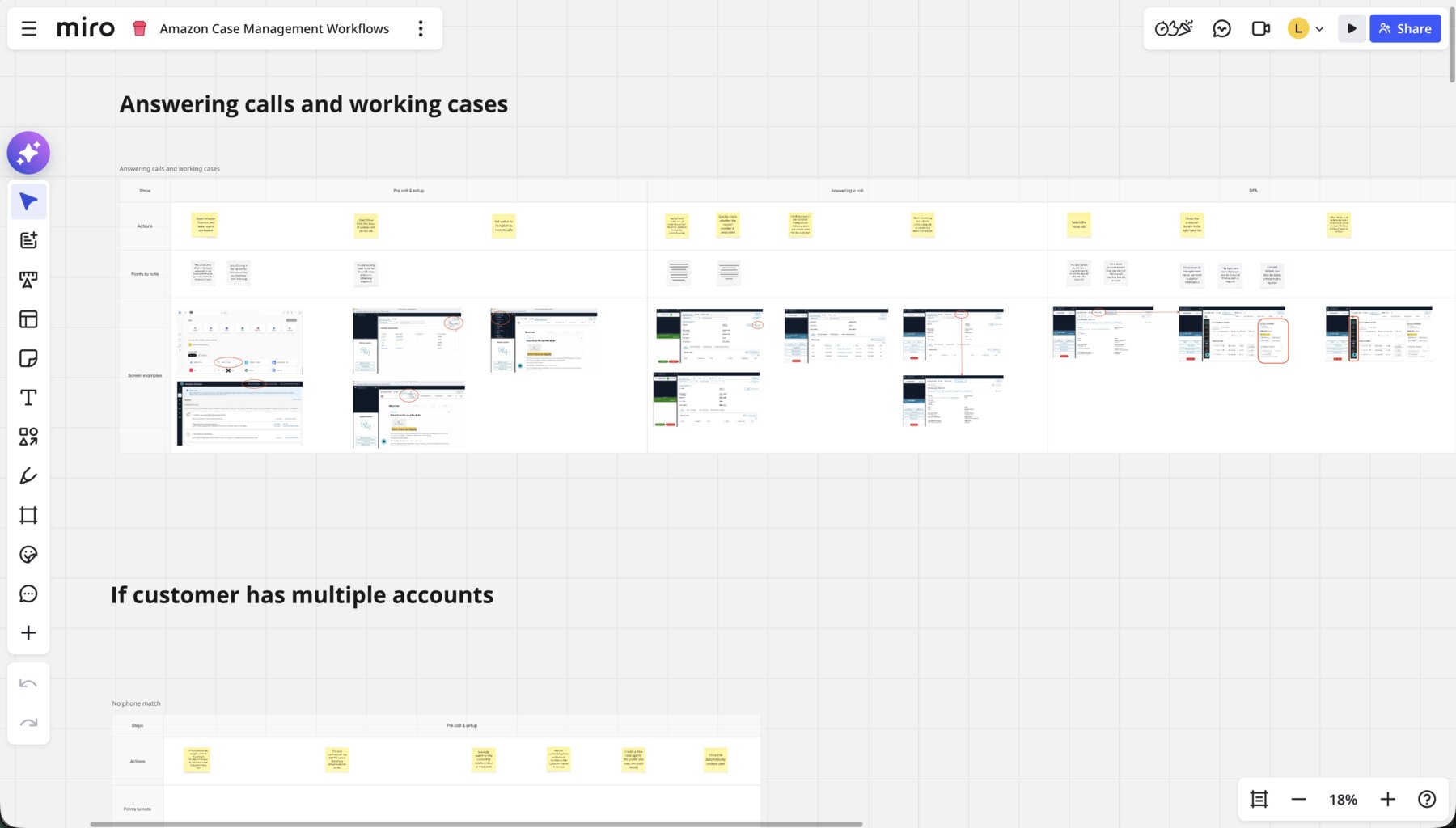
In parallel, I started shadowing sessions with the Customer Care and Change of Tenancy teams – both in person and remotely – to understand how agents actually worked day-to-day. These were documented in Miro and recorded via Marvin, capturing real workflows, pain points, and the data agents needed at each stage of a customer interaction across a range of scenarios: Move In, Move Out, Move With Us, Deceased accounts, and more. I also mapped the most frequent customer queries by lifecycle stage, giving the team a clear picture of what Nova needed to surface quickly and reliably for agents to resolve cases effectively.
The Nova-inside-Amazon decision
One of the first design challenges was how Nova would sit within the Amazon Connect interface. The initial assumption was that Nova could be embedded as an app panel within Amazon Connect largely as-is. It quickly became clear that Nova's layout wouldn't fit comfortably in the constrained app panel space without significant changes. I assessed with the engineering team what the minimum viable adjustments were – changes that would allow Nova to function inside Amazon Connect without compromising its use as a standalone tool. This led to a structured set of UI optimisations: replacing the customer information sidebar with a compact dropdown, converting navigation to tabs, adjusting padding for the compact layout, and integrating key agent actions – quick connects, number pad, case creation – directly into the interface.
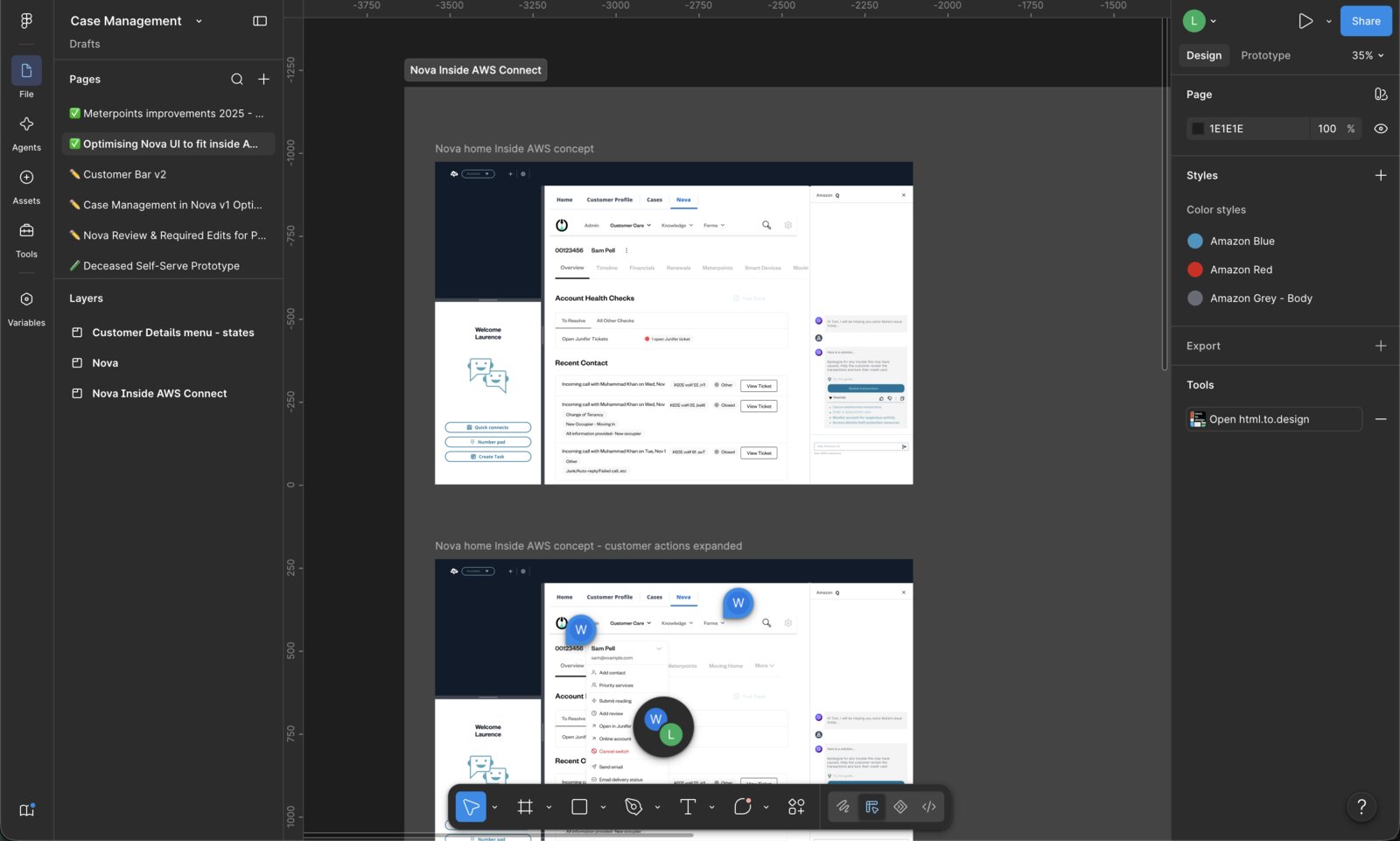
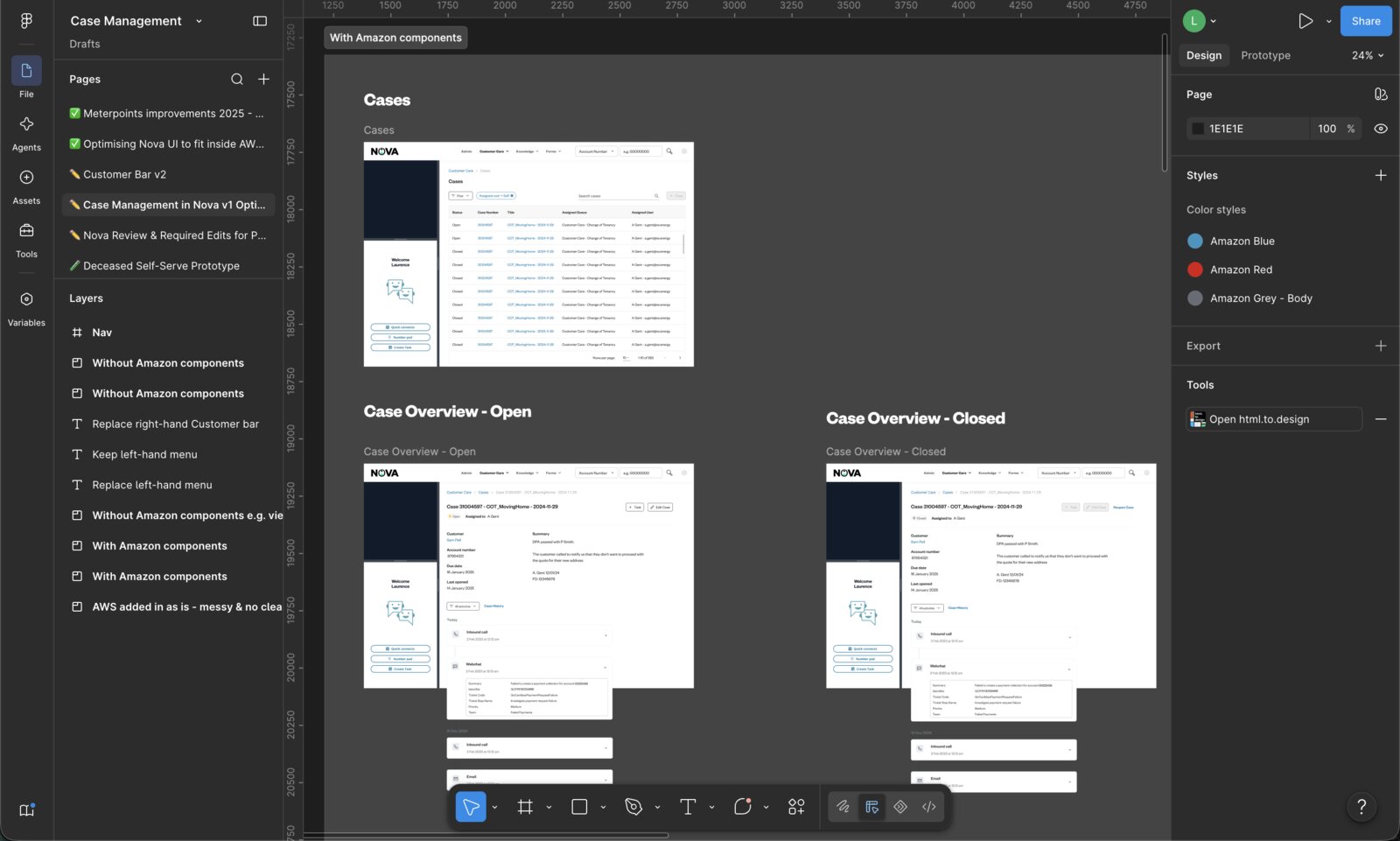
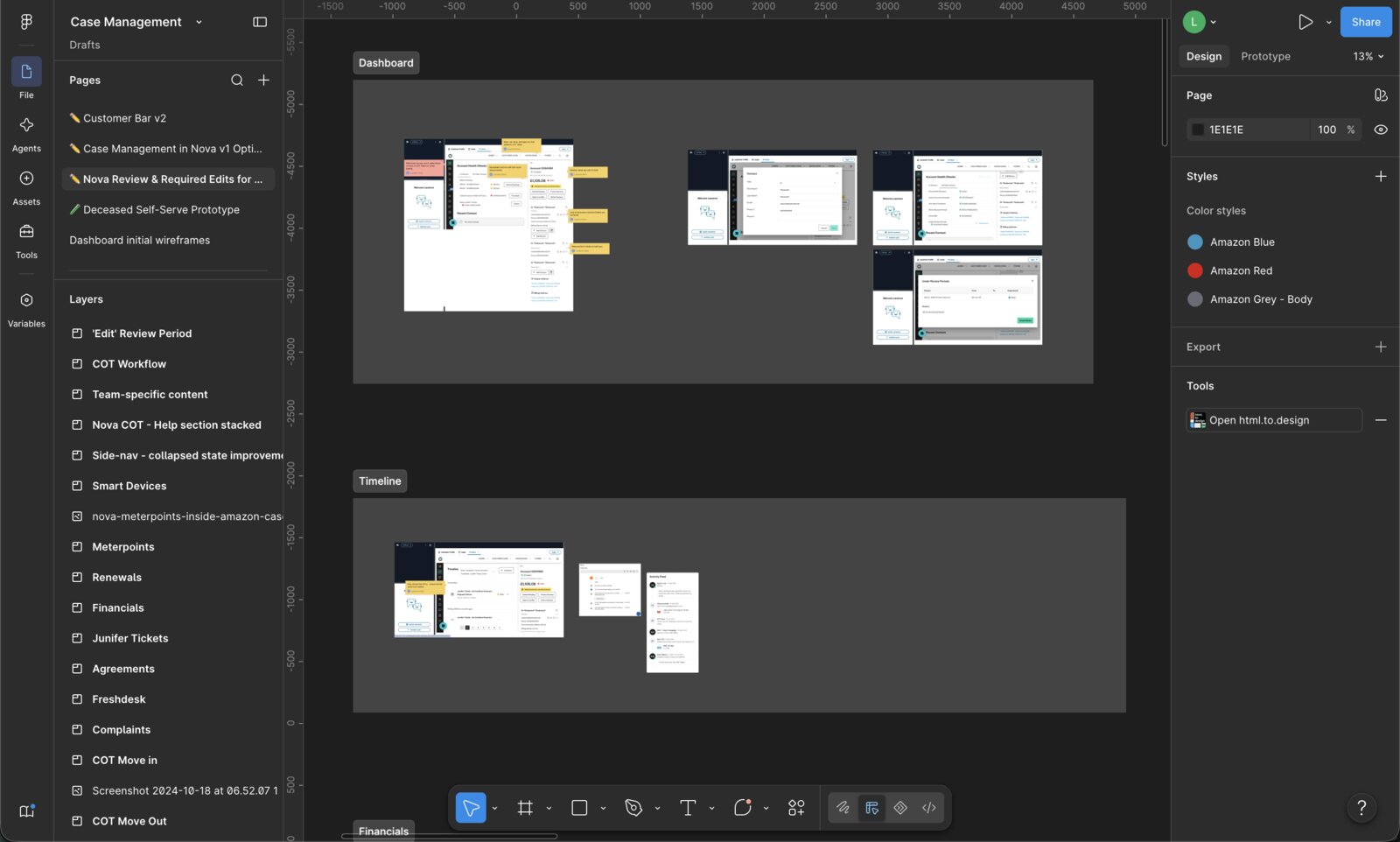
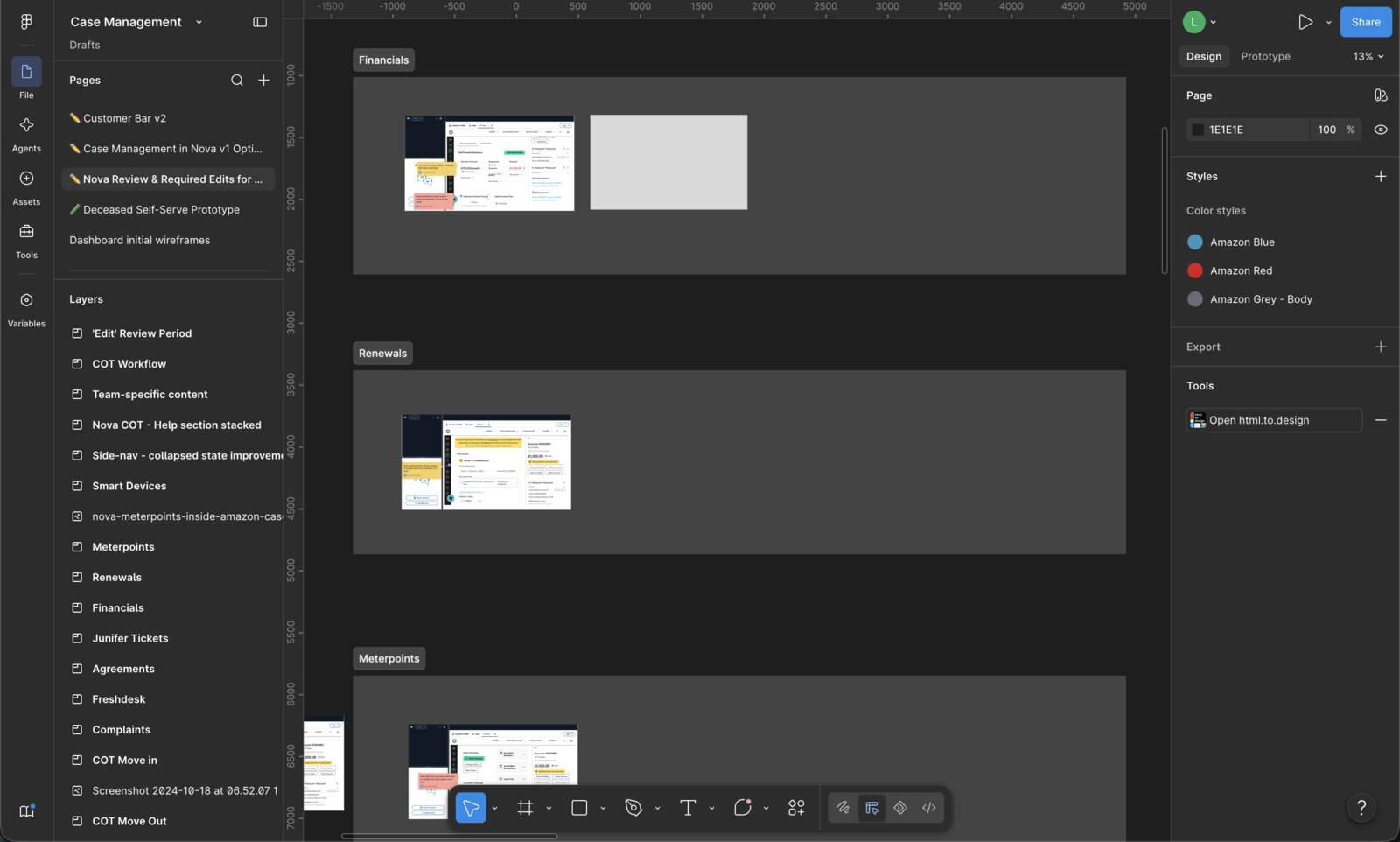
The Figma file for this work covered the full case management UI within Nova, including the cases list, case overview in open and closed states, the Amazon-integrated Nova home concept, and a review document capturing the specific edits required for the POC.
Rollout and workflow documentation
After the POC was tested with the Change of Tenancy team, we used their feedback to refine workflows and plan a phased rollout to other operations teams, working toward the largest team – Customer Care – last. For each team, I produced experience maps and workflow documentation in Miro covering how agents would answer calls, work cases, handle complaints, manage move-in and move-out scenarios, and deal with edge cases like misdirected calls. These became the basis for agent training materials and helped ensure the configuration of case templates reflected real workflow needs.
The migration from Freshdesk completed in Q2 2025, with historic data preserved and surfaced within the Nova timeline. There was an expected bedding-in period – an initial spike in after-call work time and resolution times in the first month as teams adapted to new workflows. After this period, metrics began to improve and have continued to do so, with the contact centre working toward targets of 13-minute average handling time for voice and 73–75% first contact resolution.
During and after launch, I entered a hypercare period where my role included shadowing agents using the new case management tools and noting pain points to address. From this, alongside direct agent feedback, we created snag lists for webchat, telephony, email, case management, and Nova, which were then prioritised accordingly to be fixed.
A vision for Nova's evolution
The successful migration was a meaningful step, but the agent experience observations gathered during rollout made clear that the initial setup had real UX limitations. Agents were effectively working across two systems displayed within a third, with the constraints of the embedded app panel creating friction that hadn't been fully apparent until the system was in daily use at scale.
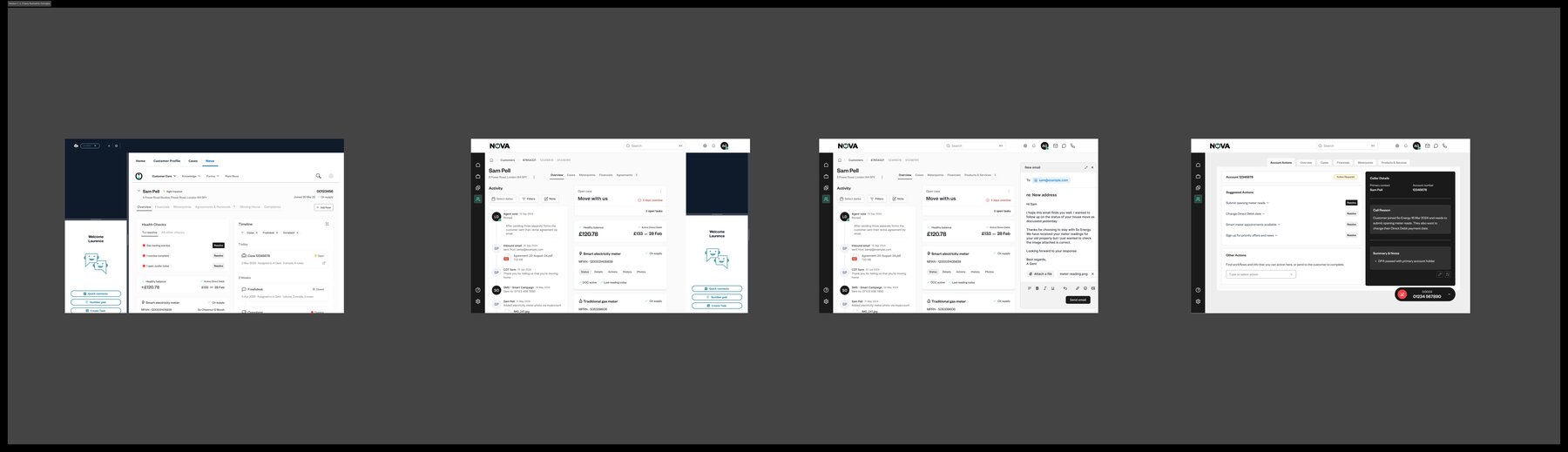
Rather than accept this as the ceiling, I proposed a longer-term evolution strategy framed around three horizons, documented in a formal Agent Experience Strategy and illustrated through concept designs in Figma.
Horizon 0.5 represented the immediate state: Nova inside Amazon Connect with minimum viable edits to make it functional within the constrained app panel layout.
Horizon 1 inverted the architecture – Nova as the parent application with the Amazon Connect Contact Control Panel integrated within it, rather than the other way round. This would give agents a single coherent interface with automatic customer identification from incoming contacts, integrated communication tools, real-time case visibility, and the ability to switch between accounts without leaving Nova. The expected outcome was a measurable reduction in system switching and after-call work time.
Horizon 2 extended this with a custom contact bar pulling functionality directly from Amazon Connect, removing the iframe dependency and enabling a more seamless, Nova-native experience. This stage also introduced guided workflows, AI-powered recommendations, real-time sentiment analysis, and smart channel routing.
Horizon 3 looked further ahead – predictive and proactive features including next-best-action AI, proactive issue identification before customer contact, and universal omni-search. Speculative when first proposed, these capabilities are now becoming increasingly feasible given the engineering work on Agent Assist and Bedrock that has taken place in subsequent quarters.
I worked with two engineers to assess the technical feasibility of each horizon. Amazon's enhanced SDK – mentioned during early conversations with the AWS partner team – was a key dependency for the Horizon 1 architecture. Initial engineering spikes confirmed the approach was achievable, and early Figma prototypes demonstrated not just the horizon concepts but the specific methods for displaying cases within Nova itself. This work was subsequently deprioritised in favour of other business priorities and currently remains on hold.
What the migration enabled – and where it's going
The move away from Freshdesk resolved a number of structural problems with the previous setup. Case notes in Freshdesk were prone to error – unreconciled child tickets, duplicates, and a manual three-level categorisation system that was inconsistently applied and difficult to report on reliably. Amazon Connect Cases replaced this with structured, intent-based contact categorisation, producing more accurate and consistent data from day one.
That richer contact data has had a compounding effect. More accurate categorisation has enabled better-targeted contact deflection initiatives, helping the team identify the specific journeys and query types most amenable to self-service improvement and reducing avoidable contact more systematically than was previously possible.
Other measurable improvements since the migration include higher first contact resolution rates, lower call waiting times, and increased web chat adoption – with agents now able to serve up to three customers simultaneously across chat channels. The task functionality embedded in Amazon Case has also improved handoff between teams, replacing ad hoc processes with structured, trackable handovers.
The migration also paved the way for Agent Assist – recently launched – which uses AI to reduce the time agents spend manually typing notes during and after calls, freeing capacity to serve customers more attentively and investigate complex issues in greater depth. This is a direct realisation of the Horizon 2 vision, and sets up the conditions for the fuller Nova integration that the horizon strategy points toward.
The depth of agent research and workflow documentation produced during the migration continues to inform Nova development. The Nova redesign now underway – building section-by-section prototypes in Claude with a structured jobs-to-be-done analysis – is designed to function well both inside Amazon Connect and as a standalone app, moving deliberately toward the Horizon 1 and 2 vision.
Reflection
This project stretched the definition of what a product designer does. Much of the work – event storming, workshop facilitation, workflow documentation, shadow research, POC coordination, feasibility assessment – sits closer to service design and delivery than traditional UI work. That sometimes felt uncomfortable, particularly when commercial design projects were progressing without me.
In hindsight, the value of this work is clearer than it felt at the time. The agent research alone produced a depth of operational knowledge that has since shaped multiple other initiatives. And the role I played – bringing design thinking and human-centred rigour into a technically complex, fast-moving transformation, then stepping back to define a longer-term strategic vision for where it should go – is exactly the kind of contribution that distinguishes design leadership from design execution.